From a Penny Bazaar in Leeds
The M&S story begins a long way from almond biscuits. Michael Marks established his first penny bazaar stall at Kirkgate Market in Leeds in 1884, helped by a £5 loan from Leeds warehouse owner Isaac Jowitt Dewhirst. At that original stall, Marks used the wonderfully direct slogan, “Don’t Ask the Price – it’s a Penny”, which is about as Yorkshire as retail poetry gets. Thomas Spencer, born in Skipton in 1851, had worked as a bookkeeper for Dewhirst’s wholesale company before joining Marks. Together, Marks and Spencer built the business from market-stall practicality rather than polished boardroom mythology.
Why M&S Food Feels Different
Food became part of Marks & Spencer from 1931, and that matters because M&S groceries were never quite like the normal branded shelf. For much of the twentieth century, shoppers knew the chain through its own labels, especially St Michael, introduced in the late 1920s and used across almost all goods by 1950. That little name on a packet became part of British domestic life: knickers, school shirts, biscuits, puddings, all somehow living under the same calm umbrella. Corporate history often tidies this into “brand strategy”, but in real houses it meant Mum trusted it and Gran probably had three of them in the cupboard.
The Own-Label Habit
M&S built a reputation around its own products and close supplier relationships, rather than filling shelves with everyone else’s labels. Until 2006, its food halls had not sold outside brands, which says a lot about the confidence of the place. This does not mean every modern packet has a romantic Victorian birth certificate, and almond biscuits are not a direct relic of Kirkgate Market. But they do sit inside that long M&S habit of selling food under its own name, with a certain tidy Britishness about the whole arrangement. The packet may be modern, but the feeling is very old high street.
Biscuits, Cupboards and Small Certainties
Almond biscuits are not usually the loudest thing in the tin. They are the sort that get opened when someone says they only want “something small”, which is often a warning sign. In Britain, M&S biscuits have a way of turning up at visits, after-dinner tea, Christmas side tables, office kitchens and the sort of aunt’s house where the kettle is already on before you have taken your coat off. They are less about novelty and more about recognition. You see the packet and your brain quietly files it under: yes, that will do nicely.
What Travels in the Suitcase of Memory
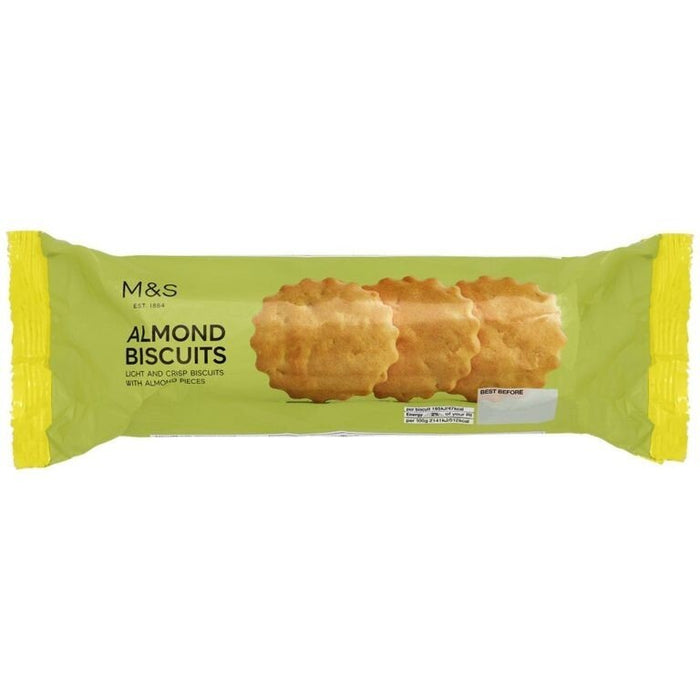
For British shoppers in Canada, a packet like M&S Almond Biscuits can carry more than its weight suggests. It is not just almonds and biscuit crumb. It is the food hall after work, the sensible bag of shopping, the slightly dangerous biscuit tin, and the small pleasure of finding something that looks how it is supposed to look. Halifax is a fair distance from Leeds, and Nova Scotia weather can make even British drizzle look underqualified, but some habits travel well. The Great British Shop is glad to give this one a quiet place on the shelf.